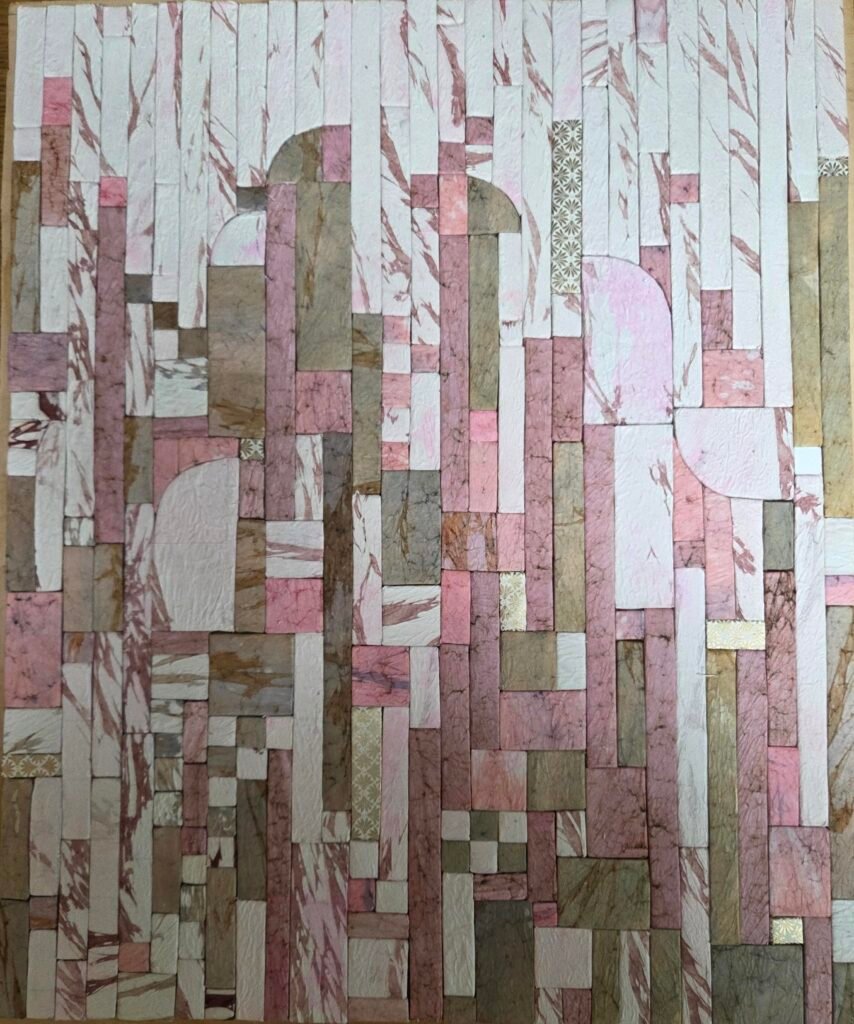
“CITYSCAPE” Paper Mosaic 15″ by 18″
Ceramic tiles, Tile panels, and Porcelain on steel panels
Collages, and Paper Mosaics
New Inspirations – Monumental Tile Panels
I am a retired architect who, before retirement, began designing ceramic tiles by having my drawings made into decals which were then fired to the ceramic wares. Because drawings are line only and one color, decals were a natural extension of my work. However, due to the various constraints of the ceramic production process, I often worked in alternative media. At present, after fresh inspirations, I am again working on several large scale projects that are to be executed in ceramics.
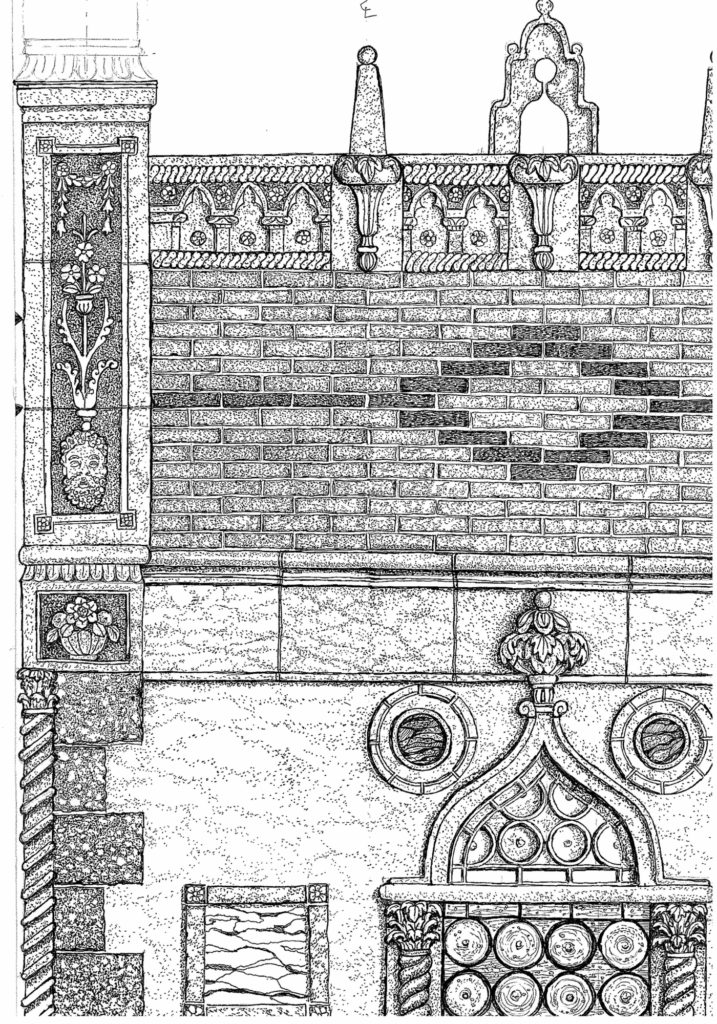
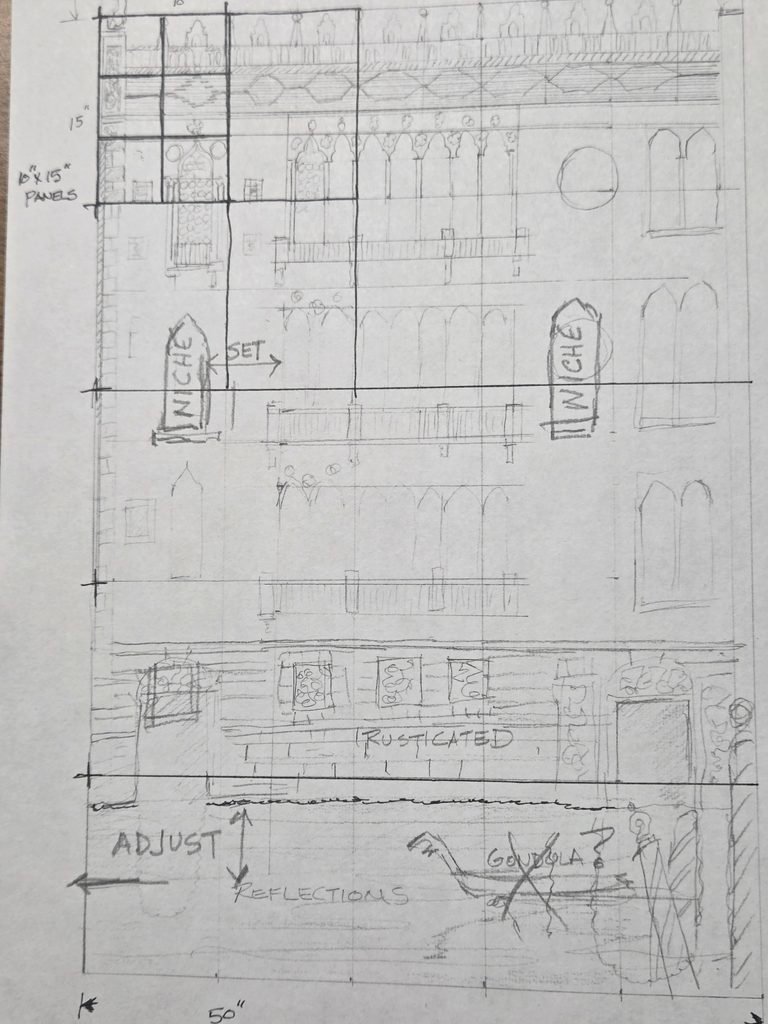
MONUMENTAL PANEL: “VENETIAN PALAZZO II” Module Detail The overall design without framing elements is 50″ wide by 85″ high (25 modules total + 10″ x50″ blanks) The detail shown corresponds to the uppermost left module on the cartoon layout that is divided into six 5″ by 5″ blocks. The panel itself would be composed of 10″ by 15″ tiles to eliminate the grout lines exhibited by the grid when using smaller dimensioned tiles.
TILES: Designs utilizing a 2 tile alternating matching scheme
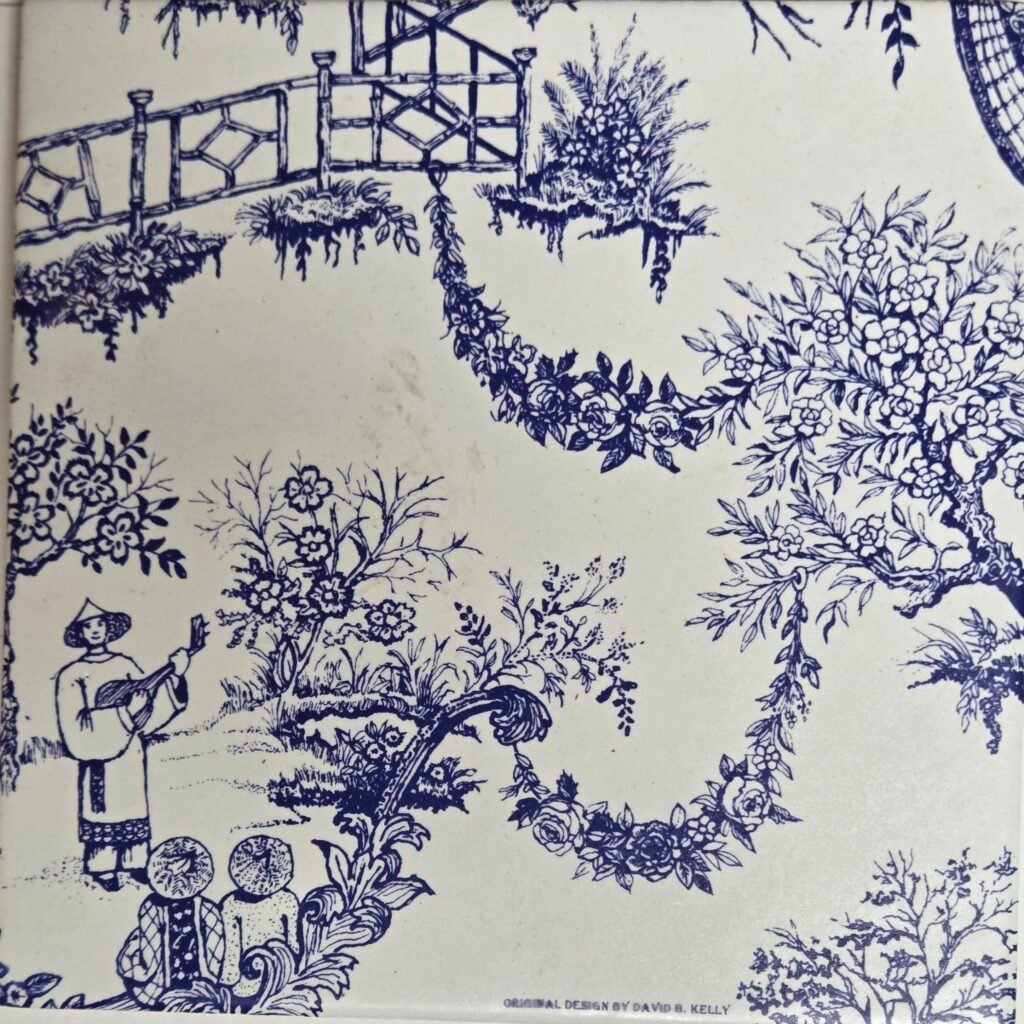
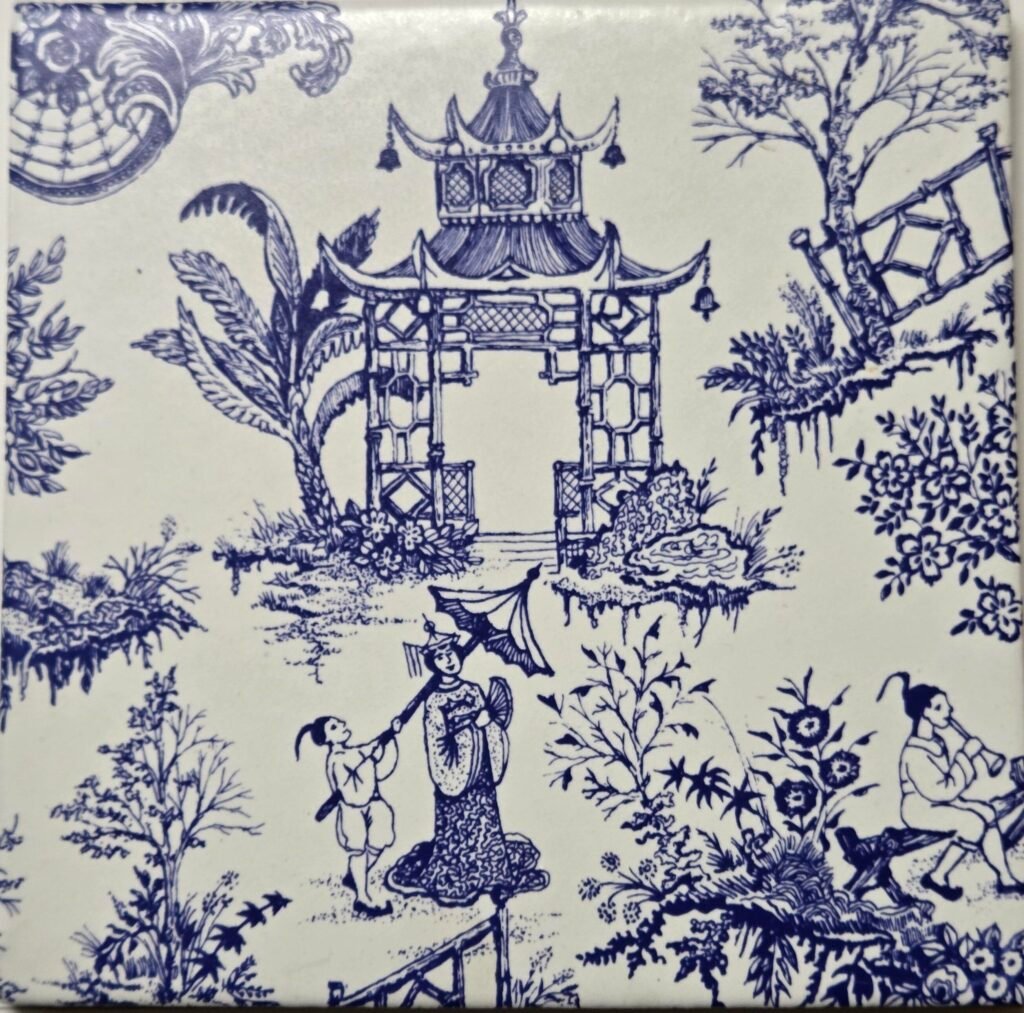
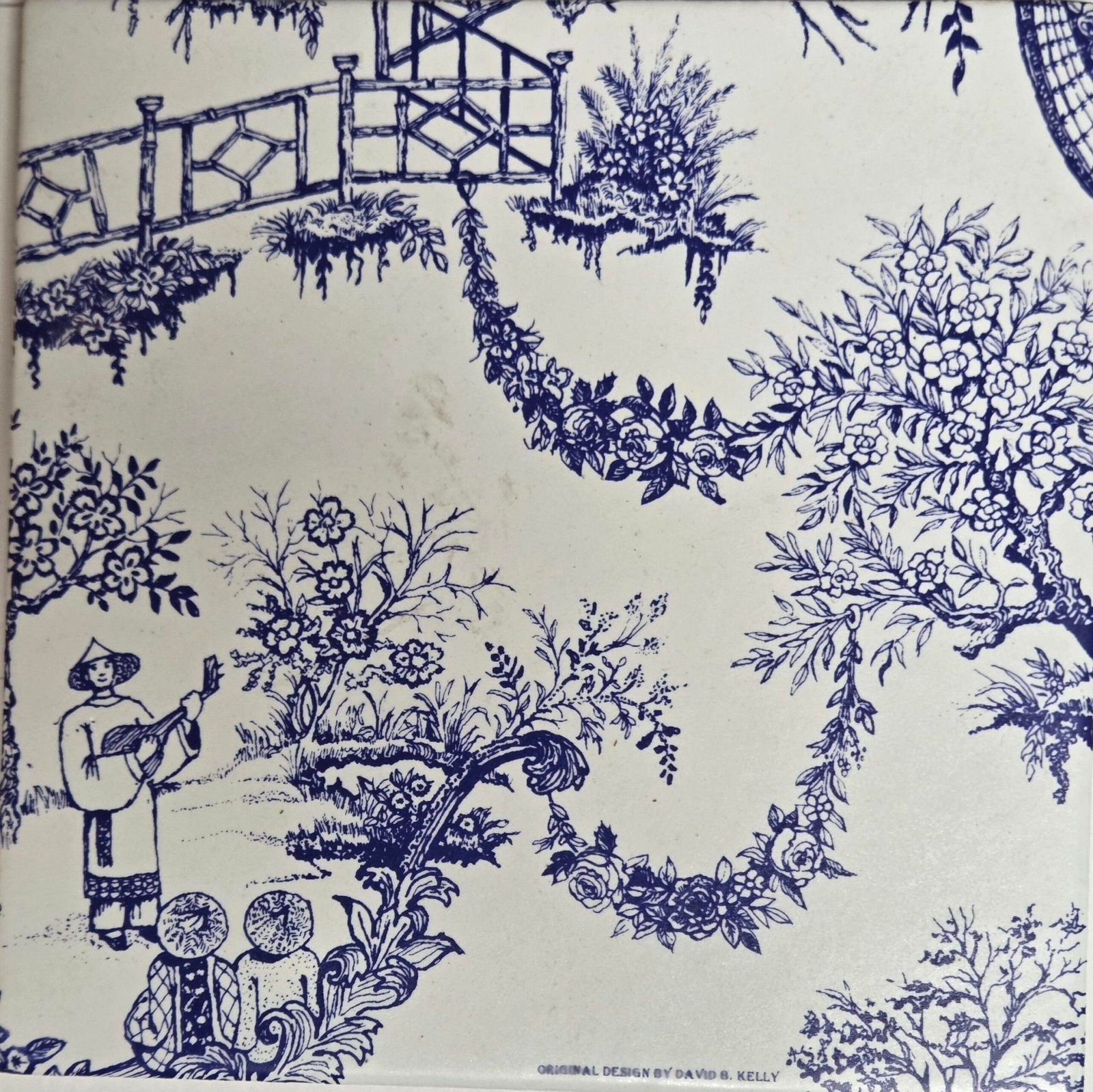
“Rococo Chinoiserie Toile” 8″ by 8″ Porcelain body tiles that allow for exterior installations
When first starting my explorations of designs, I quickly realized that I was not satisfied to reproduce the designs of the instantly identifiable types: the Delft, the Portuguese azulejos, the Mexican talaveras, the Persian Izniks. Searching for inspiration, I encountered a two tile matching scheme design at a Columbus, Ohio showroom. Intrigued by this idea, I turned to my garden, or rather, to my terrace, which contained a hanging container of fuchsias. The exotic shapes of the flowers, the linear quality of the stems and foliage presented themselves as an image that would lend itself to spilling across two tiles.
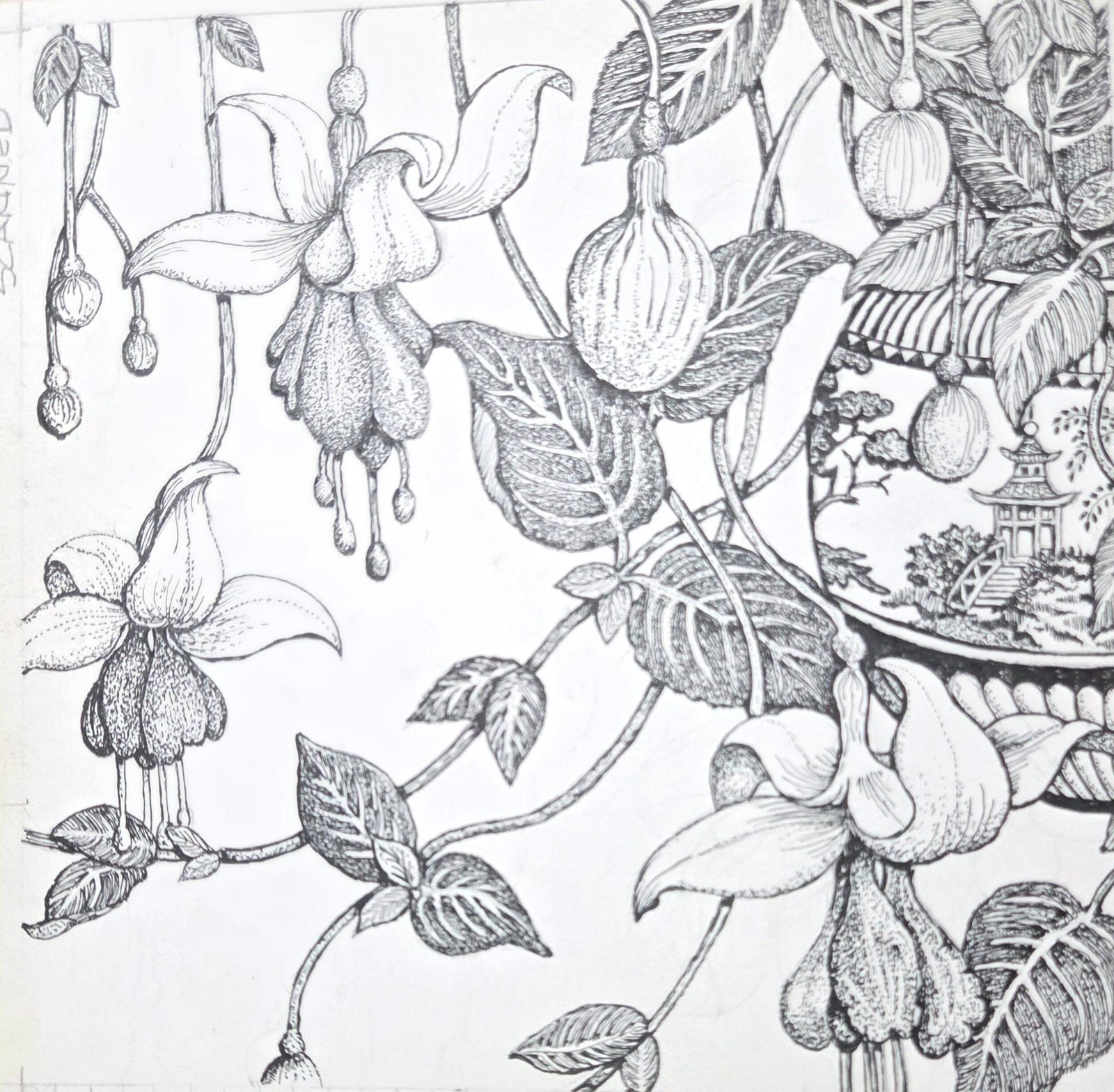
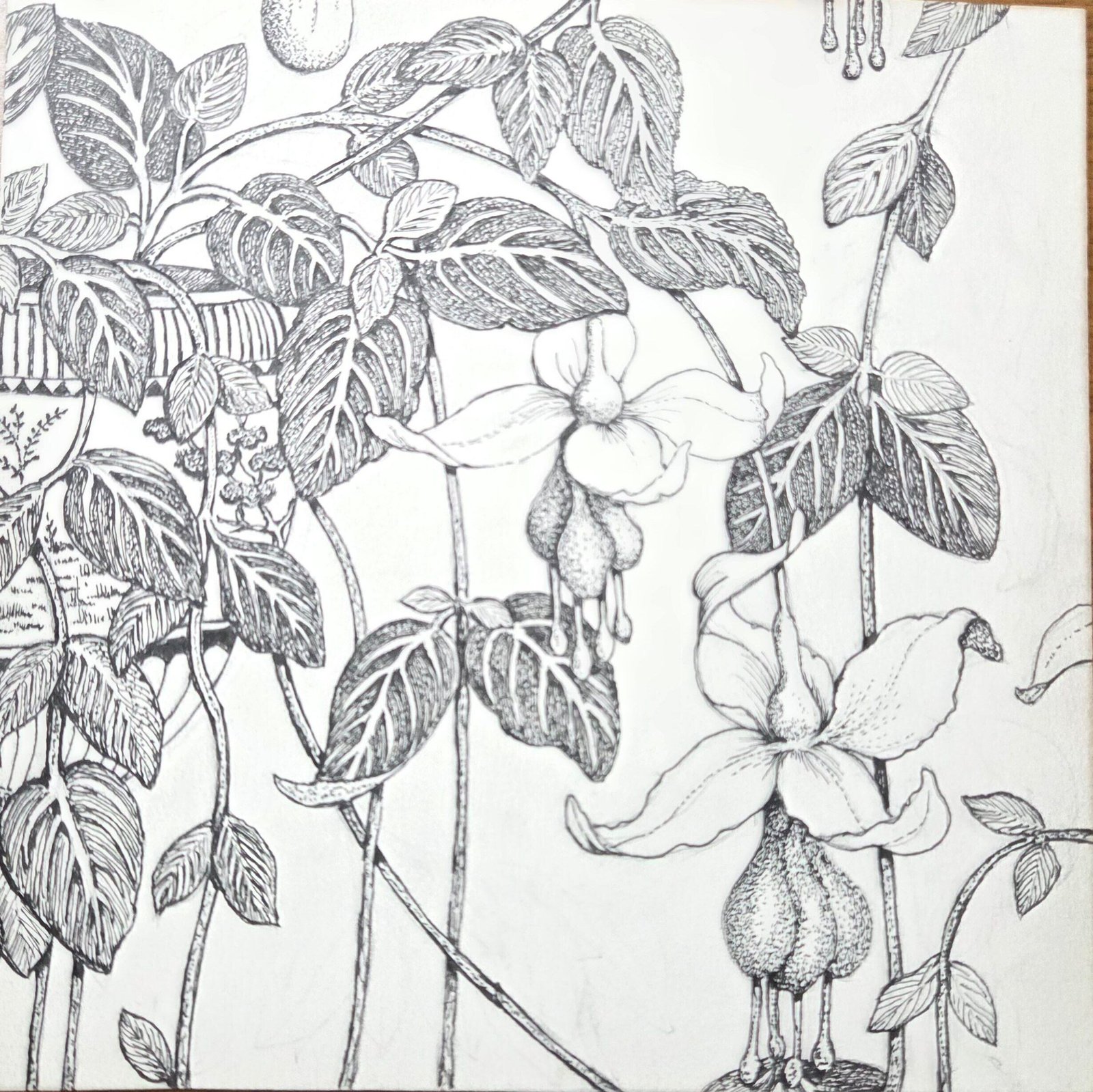
I have always preferred to draw rather than to paint and this choice was only strengthened by my architectural education where we were exposed to the last vestiges of the Beaux Arts traditions of fine ink rendering and the study of shades and shadows. Because of my use of ink and rapidograph technical pens, my designs were easily transformed into decal of line only and one color.
Tile designs executed as collages
As I developed more and more designs, rather than create decals, obtain, decorate, and schedule the firing of ceramic tiles, I began to explore manipulating prints of the designs. Simultaneously, I encountered the exquisite Japanese Washi papers which are inspirational in themselves.
Also, at the outset of my explorations, I turned to the Aesthetic Movement for inspiration because of its emphasis on “drawn” or engraved images. I was intrigued by the juxtapositioning of patterns which, in turn, were set against botanical images, often rendered realistically. These ideas were readily translatable to collages and I enjoyed the additional avenues of expression.
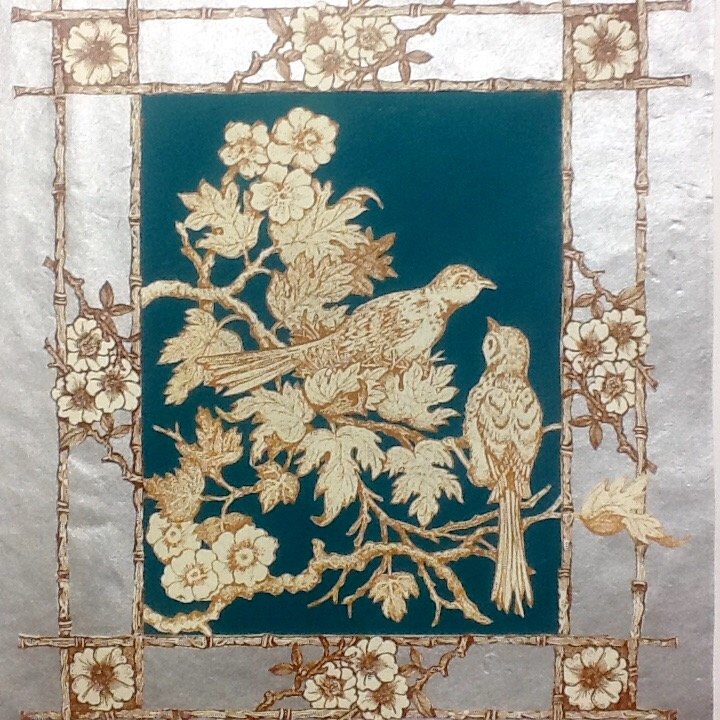
“AESTHETIC SPARROWS” sold
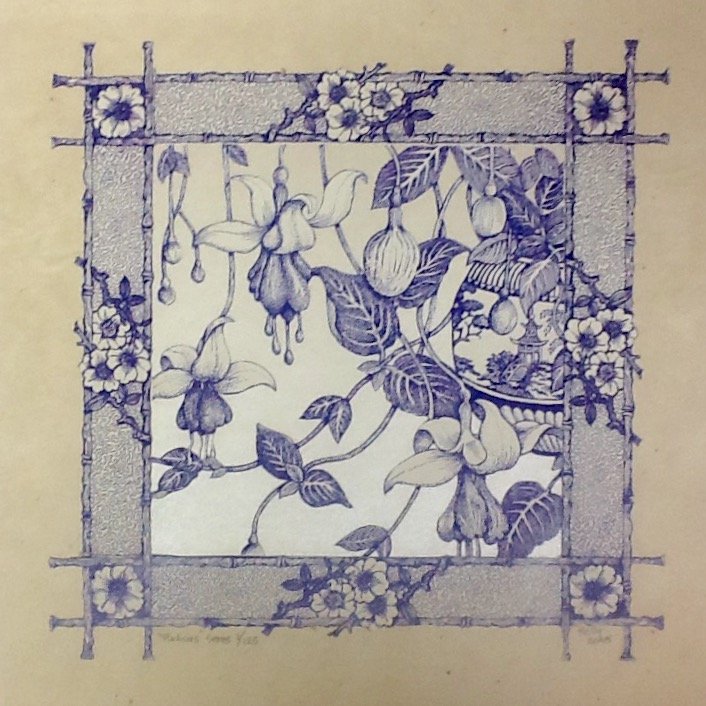

“BLUE FUCHSIAS” sold “ASH WEDNESDAY” 8″ X 16″
Paper Mosaics
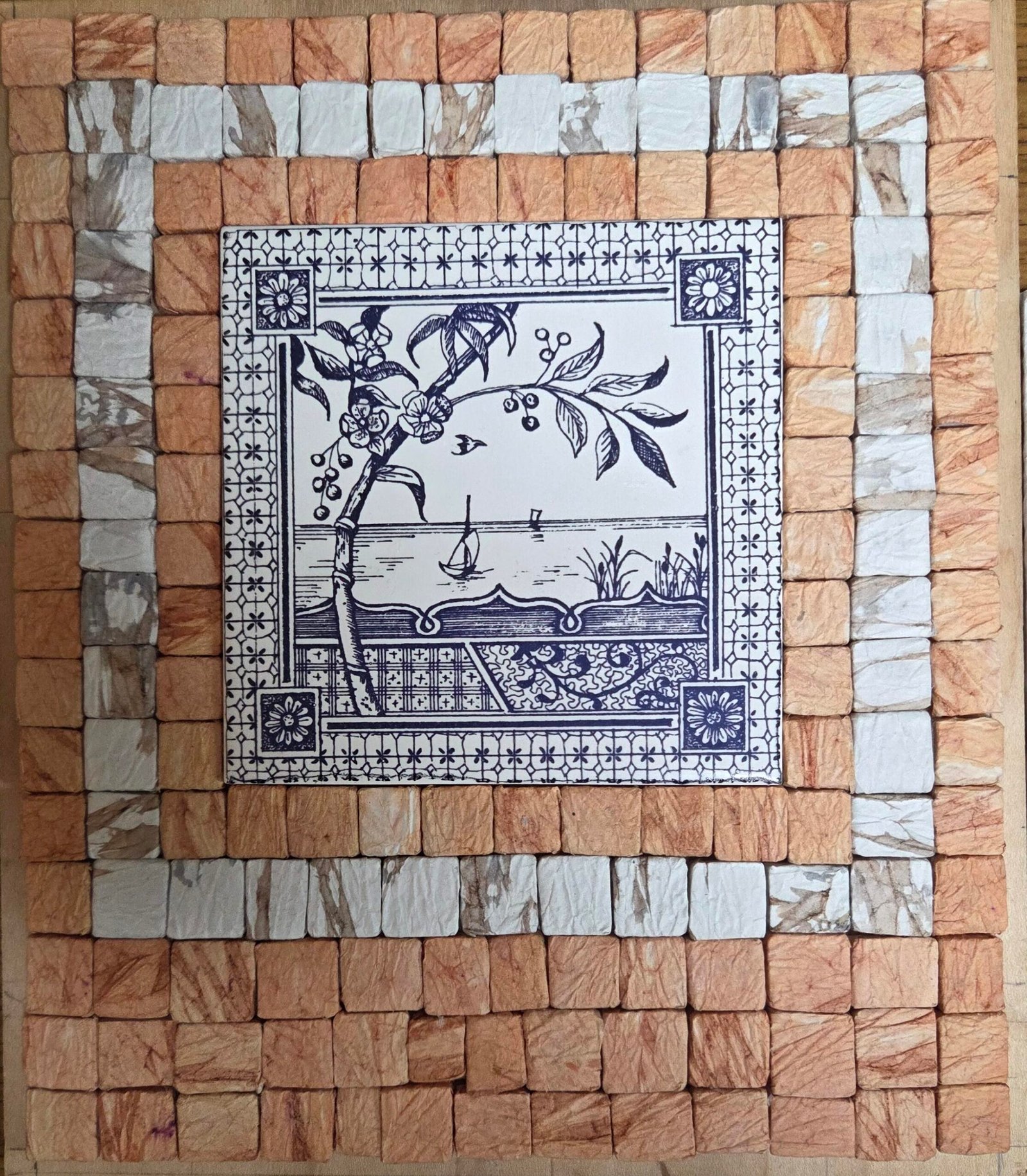
Working with beautiful papers challenged me to an efficiency of materials. Having acquired a trove of exquisite handmade Italian papers, I was reluctant to waste even the smallest scraps which I retained and filed according to basic color. The small pieces, beautiful in themselves, reminded me of Louis C. Tiffany, who viewed the waste glass from the large window projects as having potentialities for an alternative use in the creation of lamp shades, I laminated a few pieces to a backing board and discovered the similarity in appearance to the tesserae of mosaics.
Porcelain Printing on Steel Panels
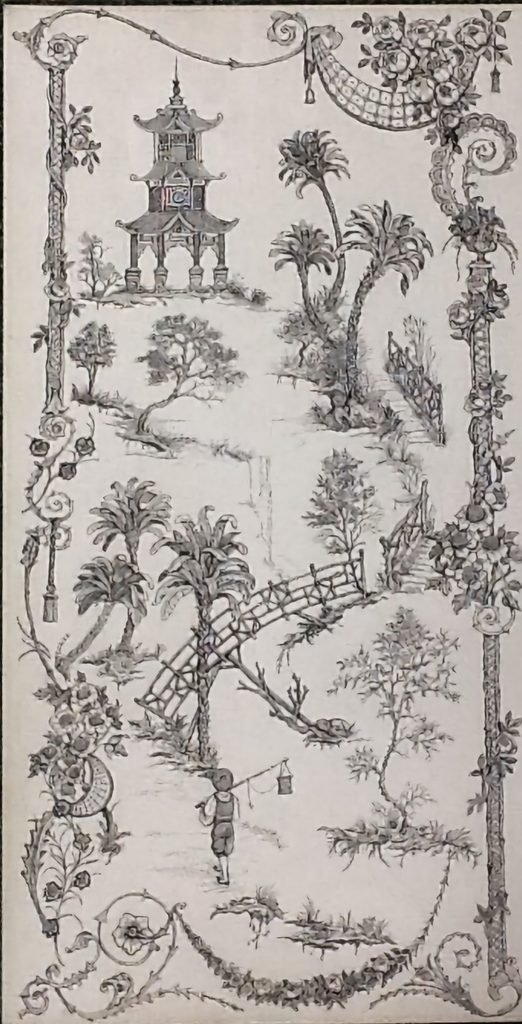
“L’Ete” 15″ X 30″ Rococo panel after Pillement
Because of my work being related to the decoration of ceramic surfaces by decals, I was constantly constrained by the limited scale of the decal manufacturing process. Modern digital printing of decals has advanced greatly and innovations like porcelain printing have been exciting. As an example, this 15″ by 30″ Rococo Chinoiserie panel can now be executed in porcelain fired to a steel panel, completely eliminating grout lines. The complete vitrification of firing allows the panel to withstand UV light degradation as well as the freeze/thaw cycle challenges. The steel panel offers an extraordinary flexibility of dimension impossible with tile. Of course, the design can still be executed on a porcelain tile.